Product Design · Case Study
Removing friction from the hiring pipeline
Problem
Understanding the problem
Hiring Managers and recruiters lack efficiency and standardized tools to select, evaluate, and manage candidates' application status throughout the hiring process. Due to a large volume of candidates, recruiters need to effectively manage communication, screening, and tracking across numerous applicants. If unsuccessful, companies risk losing time and resources with no pay off.
Research
Listening to the people who hire
We interviewed 8 professionals across the hiring spectrum, from early-career recruiters to department heads at companies ranging from startups to FAANGs.
Head of Talent
Lanai
Dept Head
Ernest Righetti HS
Recruiter
Octa
Hiring Manager
GoDaddy
Sr. SWE Manager
Admin Support
University Housing
HR Professor
Cal Poly
HR Specialist
XYZ Graphics
Habits
Small companies source through referrals and internal networks. Larger companies rely on ATS platforms, but even those fall short on coordination.
Pain Points
Core Need
A clear, shared view of where every candidate stands and accessible to everyone involved in the hiring decision.
Ultimate Goal
Ensuring both the company's and the candidate's success. Finding a candidate that meets company needs and culture fit.
Ideation
Exploring the solution space
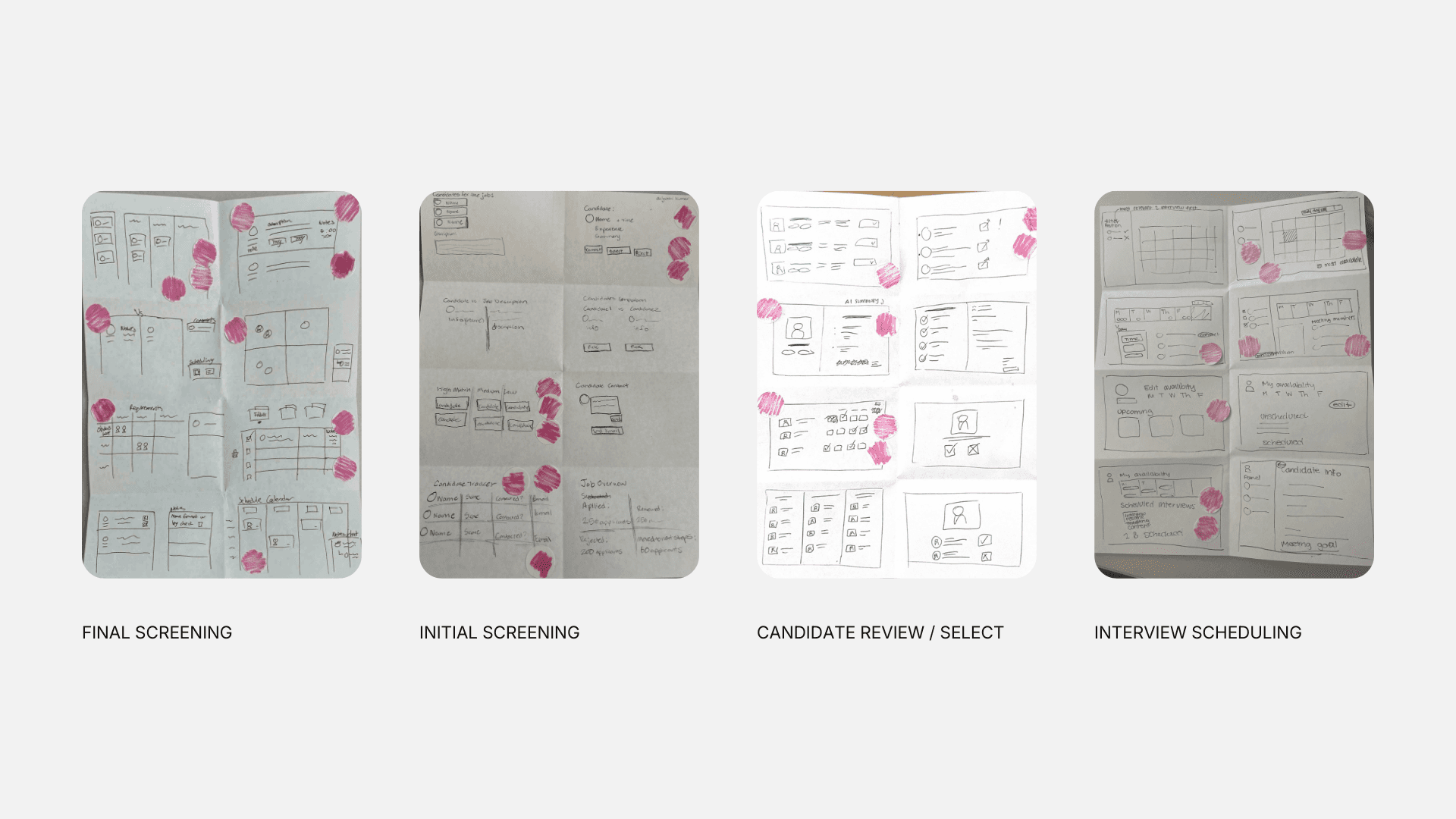
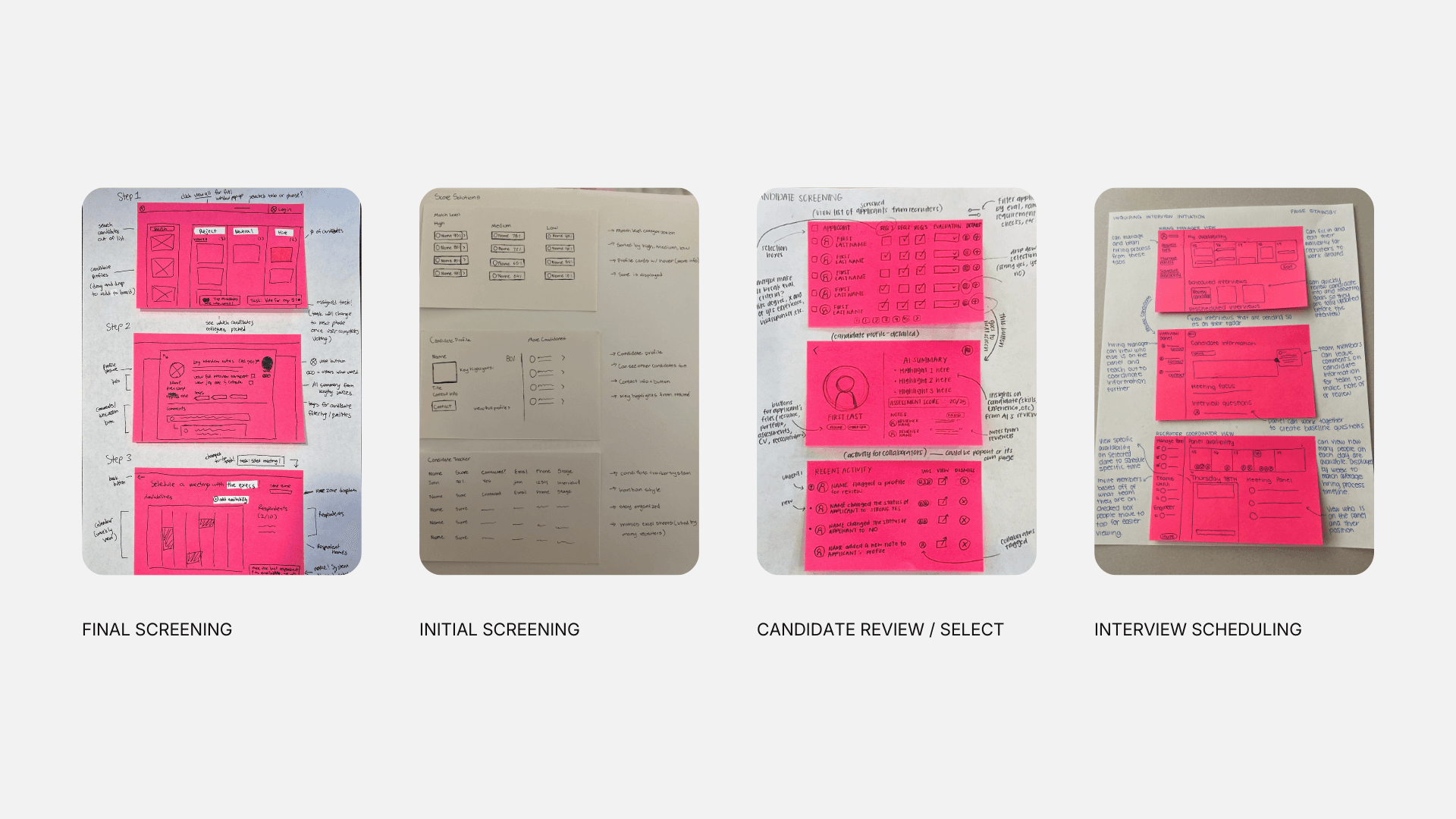
User Flow
Mapping the hiring journey
01
Creating Job Inquiry
02
Sourcing Candidates
03
Screening
04
Interview Rounds
05
Team Review & Selection
Usability testing
Testing assumptions before committing to pixels
We tested low-fidelity prototypes with recruiters and hiring managers to understand how users think before designing how they work.
Task given to participants
"Review candidate profiles and select one best-fit candidate to move to the interview stage."
Key observations
Where users got stuck
Key Decisions
Making design decisions
Each finding from testing pointed to a design tradeoff. Here's what changed and why.
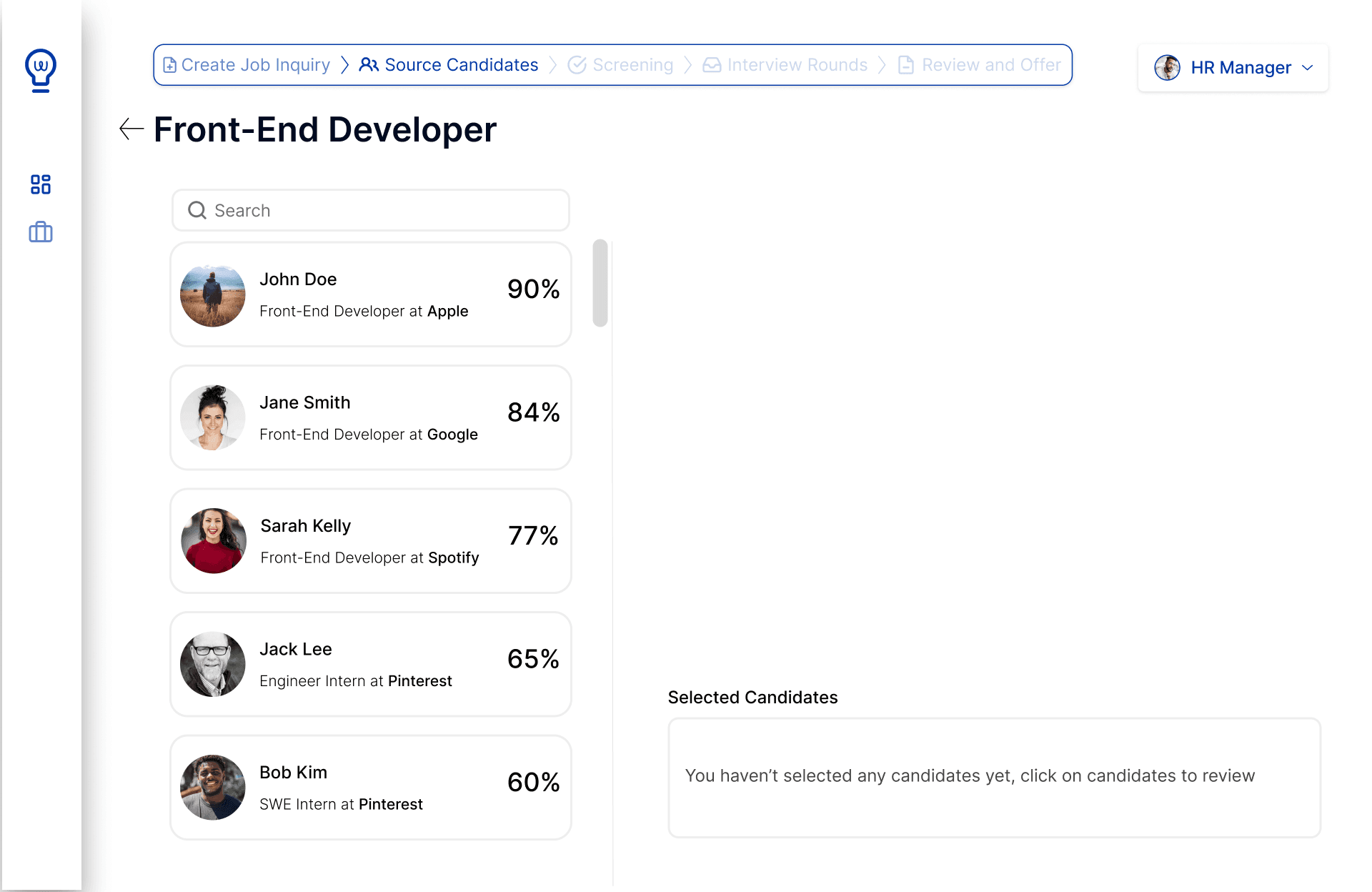
Multiple paths to select a candidate
Testing revealed users had no way to move candidates forward. Selection was added to both the list view and candidate profile, with clear visual affordances at each point.
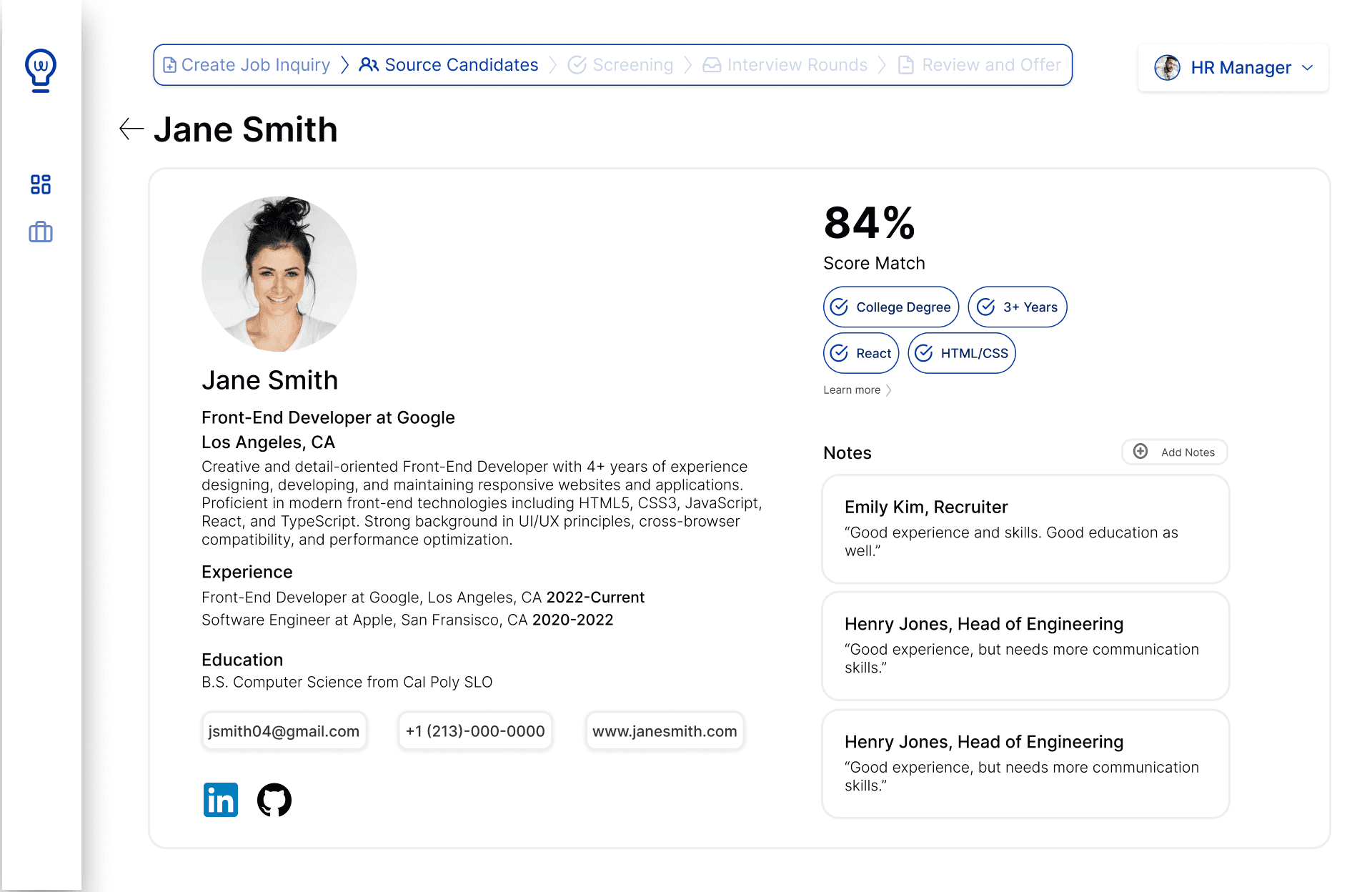
Resume embedded in the profile
Both participants refused to evaluate without seeing the full resume. Embedding it directly in the candidate profile keeps users in the evaluation context.
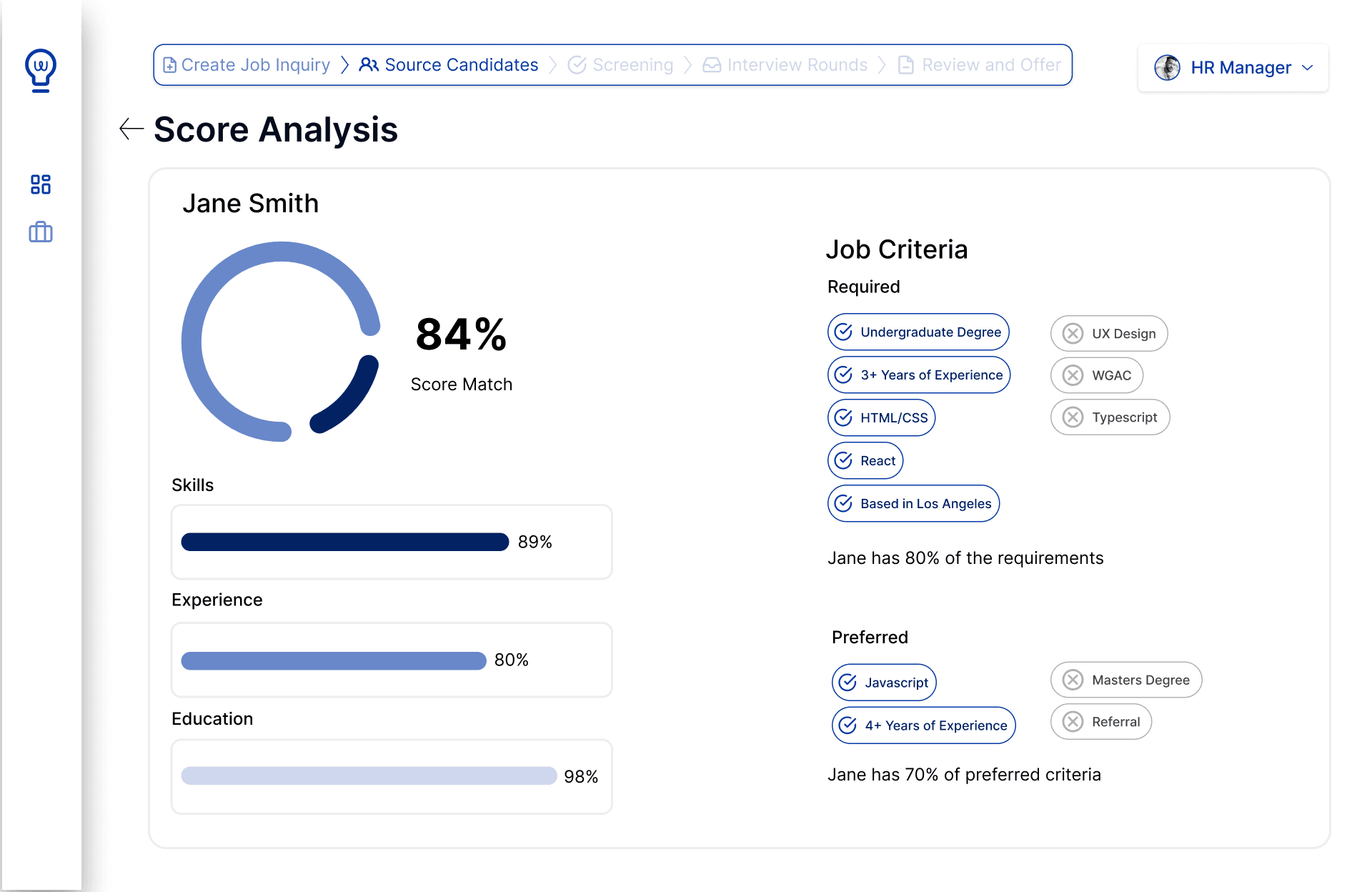
AI score with visible reasoning
Users didn't trust a percentage without context. The score was expanded into a breakdown showing contributing factors so recruiters can evaluate the AI's judgment alongside their own.
Outcomes
Creating interactive prototypes
Reflection
Process over tools
In the age of AI, spending time defining the problem and understanding context has become more valuable than time spent in Figma. Tools come and go, but strong foundations and solid process remain the same.